



ASHLEYon - The Hidden Drivers of Aging with Gary Brecka

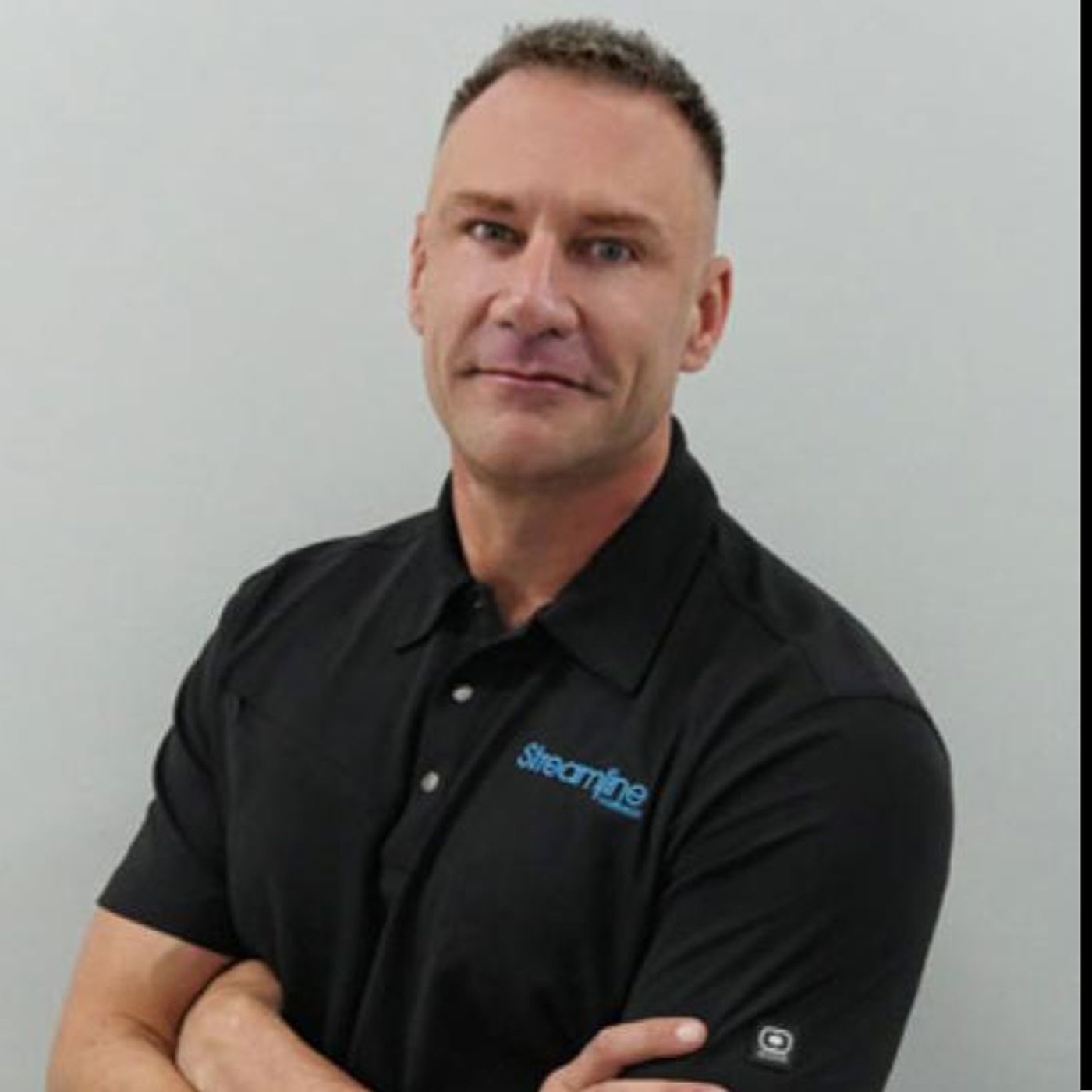






This is the man who can look at your bloodwork and tell you how long you’ll live.
Gary Brecka is a human biologist known for predicting lifespan—and helping people change it. His work has gone viral for a reason: it challenges everything we think we know about health.
In this episode of ASHLEYon, we explore the deeper systems that govern your body—energy, communication, and biological efficiency—and how optimizing them can completely change how you feel and perform.
Ashley Grace: Gary Brecker, welcome to the show. Excited to talk to you.
Gary: Excited to talk to you too, Ashley. Thanks for having me on.
Ashley Grace: Well, â beyond the vests, I hear we've got a lot in common. In terms of you come from the finance and life insurance world, I'm a finance guy. I got into health and wellness after a personal accident and some things that changed my life. â Would love to just dive in and talk about what got you interested in this space coming from where you came from.
Gary: Well, you know, for the better part of 20 years, I was a mortality expert for large life insurance. And essentially what that means is we built models â to predict mortality to the month. And every time I say that, you know, that we predicted mortality to the month, you know, people get flustered and they say, well, if you could predict life expectancy to the month, you would have won a Nobel Prize. â And I've never won a Nobel Prize, but it is actually some of the most accurate science in the You see in the large life insurance, annuity, reverse mortgage business, these are multi-billion dollar industries that take high levels of financial risk on a single variable. â How many more months does somebody have left on earth? so when an insurance company is getting ready to put $25 million worth of risk on your life, they don't care where you are on an actuarial curve. They want to know your specific mortality. And so what I did was I read medical records, â essentially for a living, you know, six days a week and put those into a model to predict mortality. We use demographic data as well. And the long and short of it is, you know, I say all the time that that database that I used to have access to â could see the light of day. And sadly, it never will. But if it could, â it would permanently change the face of humanity. It would upend modern medicine in a way that would be catastrophic â because the biggest factor that would impact someone's life expectancy was, and this was not just their lifespan, but their health span, was what we called modifiable risk factors. And modifiable risk factors were dietary and lifestyle changes that would have dramatically extended the amount of years somebody had left on earth and the number of healthy years. And we would define those years as by... â when do you start to need assistance with the five activities of daily living? They're called ADLs, bathing, toileting, ambulating, moving, â eating and toileting, right? And you secure living are meant to provide those services, some or all of them to people who can no longer do it on their own. And modifiable risk factors, know, had I been able to just pick up the phone during that career and talk to one of these patients or applicants, I could have added on average about seven years to their lifespan. And I modeled that extensively. So that's a very accurate statement. And at some point, I realized that I was gonna spend the rest of my life predicting death â when I had all of this knowledge on how to extend life. And by way of background, my undergraduate degrees are in biology, my postgraduate degrees are in human biology, and I have just a fascination with human physiology, human biology.
Ashley Grace: Wow.
Gary: I'm a deep believer in what God gave us, not so much of what man makes us. And I'm a deep believer in the body's ability to heal itself. â A big believer in the miracles that we can see in the immune system. I've developed the philosophy that we are not nearly as sick or diseased or as pathological as we think we are. We are nutrient deficient. And I've dedicated the balance of my adult lifetime to the study of genetic methylation. nutrients and the role in the human body and simple dietary lifestyle supplementation changes that people can make to really move the needle in their life.
Ashley Grace: Wow. Well, that's fantastic. Thank you for doing what you do. â I think you're making a positive impact, it seems like everybody that I talk to knows of you and what you're up to and thinks highly of the work that you're doing. keep it up. â I wonder, you talk a lot about the MTHFR gene mutation and how that kind of results in.
Gary: Thank you. Thank you.
Ashley Grace: you know, the body not being necessarily broken but being deficient and brain fog, anxiety, fatigue, you know, those are all things that I hear about every day in my role with Ignaton. â Tell us about that.
Gary: Mm-hmm. So first of all, everybody's heard of the human genome and genetic expression. â A lot of genes are informational, but they're not actionable. If I was to look at your entire genome, I would get a lot of non-usable data, the color of your skin, your eyes, your hair color, your ancestry. â But there are certain genes that control a process called methylation. And this is the process where the human body â takes all of the raw material that enters the body and converts it into the usable form. So understand the premise we're starting with, which is factual, is that there's not a single compound known to mankind, not one. There's no vitamin, mineral, amino acid, protein, nutrient, carbohydrate, fat, nothing that we put into the human body that is used in the format that we put it in. Without exception, everything goes through a conversion process to be converted to the usable form. I always use the analogy that we pull crude oil out of the ground, but you can't put crude oil into your gas tank. The car doesn't understand that fuel source. You have to take crude oil, refine it to gasoline, and now the car can run. The human body is no different. So take folic acid, for example. I'll just choose that because it's the most prevalent nutrient in the human diet. â So folic acid is useless when you put it into the body until it is converted to methylfolate. And now methylfolate is something that is used in an enormous myriad of transactions in the body. It's responsible for, partially responsible for the motility of the gut. It is involved in the production of serotonin, which is mood and emotion. It's involved in the production of â dopamine, which is the main driver of behavior. So is it plausible that deficiencies in this nutrient could lead to mood disturbances, emotional disturbances, to issues with behavior? â it cause things like the gut to â exhibit symptoms like gas, bloating, diarrhea, constipation, irritability, and cramping without a food allergy or food sensitivity or disruption to the gut microbiome? Absolutely. So very often we don't trace things back to the root. You know, we believe this in plant physiology. in plant physiology, let's say you had a leaf rotting in a palm tree and you called a true arborist, a true botanist out to look at that leaf. They wouldn't even touch the leaf. They would core test the soil and they would say, you know what, Ashley, there's no nitrogen in this soil. And they would add nitrogen to the soil and the leaf would heal. Human beings are no different. Rarely, if ever, do multiple systems in human bodies fail at the same time. What happens is one thing goes wrong, like a domino, that causes everything else. And we're so far downstream chasing these issues. So for example, if you have the MTHFR gene mutation, you're seven times more likely to experience anxiety, ADD, ADHD. You're seven times more likely to have gut dysbiosis, which is poor motility in the gut, not food allergies and sensitivities, not a disrupted gut microbiome, the motility, the pace of the gut. Right? The speed that your conveyor belt moves. In fact, never once in almost a quarter of a million patients that came through our functional medicine clinic, did I ever see a single person that suffered from anxiety that did not also have gut issues. Not once. Right? Because they're related to the same thing. 90 % of the serotonin in our body is right here. If you don't have it here, you can't have it here. And there's so many of these pathologies and ailments. You said anxiety. So let's just drill into that for a second, if you don't mind. â
Ashley Grace: same.
Gary: People that suffer from anxiety, â and there's probably a listener right now that suffers from anxiety or certainly has a loved one that suffers from it. No one ever tells you what anxiety really is. Even if you ask a therapist, psychiatrist, if you ask a functional medicine doctor, if you ask someone who suffers from anxiety, what is anxiety? They're gonna describe the characteristics of anxiety. They're gonna say, it's a sensation of anxiousness. My heart rate gets rapid. â It can come and go without a trigger. It's a sensation of the presence of fear without the presence of fear. And okay, I agree with that. Those are the characteristics of anxiety, but what is it? What caused that sensation? Well, anxiety is very specifically this. It is a rise in three neurotransmitters. These are called catecholamines. They are involved in the fight or flight response in human beings. And if these neurotransmitters rise, you will feel the presence of a fear, whether there is a fear or not. So for example, if you got up from your desk right now and you walked outside, and when you opened the door, somebody was standing in front of you with a knife, right? Very real threat, right? Your pupils would dilate, your heart rate would increase, your extremities would flood with blood, your hearing would become more acute. You would begin to instantly have a fight or flight response. What happened? You had a dump of catecholamines, norepinephrine. epinephrine, which we also call adrenaline, and dopamine. And so that's what caused that response. Now, if you were laying in your bed tonight and you just started thinking about getting eaten by a shark, you just started ruminating about getting eaten by a shark, you could have the exact same response. Even though you could argue with yourself the chances of a shark getting out of that ocean, I have an ocean right here, and making it up, I live on the 21st floor, coming up that elevator with those little flippers.
Ashley Grace: Yep.
Gary: â and biting you in bed or zero, you could have the same response. How is it that I can have the same response to a presence of a real fear as to, to an entirely imagined fear? Because neurophysiologically they are the same thing. There are rise in catecholamines. So now that we know that the, the, the solution becomes not, do I cope with it? â but how do I get rid of it? How do I lower catecholamines? I mean, if you're wearing a heavy backpack, you can always just get stronger and deal with it, which is what a lot of therapeutic interventions are designed to do, is to teach you to cope. I'd like to teach people to get rid of it so they just don't have to deal with it. Let's take the backpack off. So there are certain genetic mutations. CompT is one C-O-M-T, catechol-O-methyltransferase. These are very common gene mutations. About 46 % of the population has... MTHFR, which means you can't process folic acid, â which may not sound like a big deal until you realize that folic acid is the most prevalent nutrient in the human diet. And folic acid, for the record, is an entirely manmade chemical. Folic acid does not exist anywhere naturally in nature. You cannot find folic acid anywhere on the surface of the earth. We make it in the laboratory. It wasn't even discovered until the 40s. In the early 90s, â chemical companies convinced
Ashley Grace: Yeah.
Gary: the federal government to spray our entire grain supply with folic acid. All white flour, rice, pasta, cereals, grains of any kind in the United States are fortified or enriched, which is a code word for sprayed with folic acid, with this folic acid. So let's just say you're one of these people with the gene mutation MTHFR. You don't know you have it. You're eating a standard American diet, lots of white bread, white flour, rice, pasta.
Ashley Grace: Wow.
Gary: â Lots of grains, your kids are eating cereal. Now you're putting voluminous amounts of this folic acid chemical into the body. Your body cannot process it, so it skyrockets. Your body's deficient in what it needs, methylfolate. â So what are those consequences? Heightened catecholamines, more anxiousness, more anxiety, racing thoughts, attention deficit disorder, opening more windows than you are closing. Because in the human mind, we don't just create thought. We also break thought down. We dismantle thought or else you'd always be thinking the same thing. And so what if you create thought at a faster rate than you break it down? Well, the mind becomes very clouded and we call this attention deficit disorder. It's not an attention deficit at all. It's an attention overload disorder. It's too many windows open at the same time. And we never focus on closing the windows, putting the right nutrients, complex of B vitamins,
Ashley Grace: Right.
Gary: methylcobalamin, which is a specific form of B12, methylfolate. In other words, finding the gene mutation and just giving the body the raw material it needs to do its job. What we do instead is we say, okay, if the mind's racing, let's pump amphetamines into the body, Ritalin, Bivans, Adderall, to race the central nervous system to match the pace of the mind. Okay, so what that's doing is taking the system that's not broken, the central nervous system, breaking it to match the system that is. All right. So then the next time you get a flat tire, just get out of your car and slash your other three tires. just create equilibrium. And so, you know, a lot of what I do and what I preach is just sort of zooming out, calming down and saying, does this body have the raw material it needs to do its job before we decide if this person
Ashley Grace: You
Gary: is diseased or pathological or fits one of these diagnostic categories. Because as soon as you subscribe to the fact that you have a pathology that is not curable, you can subscribe to a lifetime of medication. And the fascinating thing is if you want to see magic happen in human beings, you just give their body the raw material it needs to do its job. That's when magic happens. You you start to... â you're missing nutrients that enable the immune system to defend itself. You all of a sudden have an autoimmune disease. 85 % of all autoimmune disease by category is idiopathic. It's of unknown origin, which means medicine's thrown in the towel and said, we have no idea why this happens. You woke up one day, the immune system's attacking the colon. You have Crohn's. You woke up one day, it's attacking the lacrimal gland of the eye. You have chagrin's, it's attacking the thyroid. You have Hashimoto's, it's in the blood. You have lupus, it attacks the myelin sheath. You have multiple sclerosis. And when we ask why, they go, well, there's no cause, there's no known reason. Well, then we ask the question, does this body have the raw material it needs to do its job? And it's, you know, I get credited for all these miracle cures, like Dana White, Steve Harvey, Stephen A. Smith, I get very popularized for those things. They're not miracle cures at all. â They're simply finding the missing raw material and putting it back into a body that wasn't broken and just giving it what it needs to do its job.
Ashley Grace: Wow, so much to talk about there. So what's the point of folic acid? mean, the conspiracy factualist in me thinks that it's designed to harm us and to create need for the medical community. But there's got to be some reason for folic acid that's biological, right? Or why would they be doing that?
Gary: Yeah. Well, I think there's a reason why we call it the Food and Drug Administration, because the food leads to the drugs. And I go down a whole rabbit hole on that. â know, glyphosate, paraquat, â sexicides, pesticides, herbicides, all kinds of things, genetically modified foods. But not going down that rabbit hole, the intention of folic acid was good. You know, there was a high amount of neural tube defects in young pregnant mothers that were birthing.
Ashley Grace: Yeah, I was afraid you were going to say that.
Gary: children that had neural tube defects, they realized that this was a folate deficiency. So we created this chemical folic acid to solve that deficiency, not realizing that 42 % of the population, up to 46 % of the population can't even process folic acid. So for those women, for example, â they end up with postpartum depression, which does, by the way, start during pregnancy. It's called postpartum, but it begins during pregnancy. So if you take a woman with this MTHFR gene mutation, She gets pregnant and her OBGYN says, you need to take high doses of folic acid to help your baby to prevent a neural tube defect. And she starts taking high doses of folic acid. She immediately becomes more anxious. becomes more anxiety becomes very regular and post delivery, they actually experienced depression. â and the truth is the folic acid did them no good because they couldn't convert it. So they didn't help reduce their risk of neural tube defects. because the body couldn't convert it. Had you given them methylfolate, you would have lowered the risk of neural tube defect and not brought on the anxiousness, the anxiety, and the postpartum depression. Right now, there are no peer-reviewed published clinical studies of any validity that link pregnancy hormones to postpartum depression. So what do they say? It's just, it's related to pregnancy. No, it's actually not related to pregnancy. A woman is... perfectly genetically engineered to go through pregnancy. In fact, as the pregnancy glow should be the happiest time of their life. We just engineered by putting the wrong nutrients into their body. These incidences of depression, anxiety, anxiousness and what have you. And so, you know, the intention I would have to say was a good one. Like how do we lower neural tube defect rates? but the outcome was disastrous because we tried to replace what mother nature gives us with a chemical. which is again why I'm a bigger believer in what God gave us than what man makes us. And most of the solutions can be found in what God gave us. The best supplements have raw materials that the body already has. They just change the form and the amount. â
Ashley Grace: Yeah, that's a good, that's a kind of a good segue. You know, I've read some of your transcripts and things where you've talked about hydrogen and, you know, being the smallest molecule in the world, but maybe the most important and, you know, the company I'm a part of, Igniton, we're using quantum energy to enhance supplement ingredients effectiveness. And what we're doing is we're binding that quantum charge or energy to the hydrogen proton.
Gary: Mm-hmm.
Ashley Grace: to kind of cite that. â I think that's based on, I don't have the knowledge that you do about biology, but I just wonder what your reaction to that is and how does that, does that jive with what you've learned or studied about hydrogen?
Gary: Mm. Yeah. Well, that's genius for a couple of reasons. First of all, I think that the discovery of the role of hydrogen in human body, hydrogen gas, not the hydrogen ion, but hydrogen gas in human body, which â is H2, to me is one of the most profound discoveries of our millennia. So hydrogen is the smallest, the lightest element in the universe, â and it's the most prevalent element in the universe. and 10 % of our body weight is hydrogen, but adding additional hydrogen to the body by way of inhalation, bathing, or supplementing, I take a tablet called H2 Tab every day. I just drop an elemental magnesium tablet into water, it effervesces into pure hydrogen gas. Hydrogen is very, very unique, and there are hordes of studies published on this. Double-blind, randomized, placebo-controlled, peer-reviewed studies published on this, which is why I said I argue that there's two types of people, people that haven't read the research and don't know, and people that have read the research and are taking hydrogen every day. so what hydrogen does, it's different than any other antioxidant. So we know that in the human body, oxidative stress, free radicals cause damage, right? â But oxidative stress and free radicals are also absolutely necessary to cellular biology. Superoxide, absolutely necessary until there's too much. Hydrogen peroxide critical to cellular biology until there's too much. â The hydroxyl free radical, no known benefit in the human body. That should be neutralized to zero. And I could go on and on and on. So when we have oxidative stress, too many free radicals, this is causing cellular damage. And so we take antioxidants. Vitamin C is an antioxidant. Blueberry is an antioxidant. Why is it an antioxidant? Because it donates electrons. takes those free radicals and neutralizes them. The challenge with taking too many antioxidants is that you can over suppress oxidative stress, which is just as bad as not suppressing it at all. This is true with all kinds of things. Alkaline water, yes, if you have a slightly alkaline pH in the body, that is a healthy state, but you can also have metabolic alkalosis. You can be too alkaline and that's very dangerous. So, What hydrogen does that no other antioxidant does is hydrogen is a selective antioxidant. It reduces oxidative stress to neutrality and stops. It doesn't over suppress it. It restores what we call in human biology, redox homeostasis. That is a perfect balance between oxidative stress and reduction. It's a perfect balance. In other words, it's neutral, right? And this is, Absolutely a disease-free state. This is where your cells function their best. Hydrogen enters the, because it's so tiny, it doesn't have to ask permission to come into the cell, like other nutrients, like B12, for example. It doesn't have to go through the normal gating channels, these ion gating channels in the cell wall. It walks right through the cell wall like a ghost. It goes through the cytoplasm, into the DNA, through what's called the NRF2 pathway. And what it does is it causes the DNA to regulate the oxidative stress. It uses the intelligence of the DNA to regulate oxidative stress. That DNA could produce 1200 different cytoprotective proteins. And so now you have hydrogen entering and reducing oxidative stress, in some cases in elevating oxidative stress to neutrality. And this is why you see. hydrogen gas used in athletics to improve performance. It reduces delayed onset muscle soreness. It lowers the lactate threshold. You see studies like what was published in the Journal of Experimental Gerontology with â elderly men and women drinking hydrogen-rich water for six months and seeing improvements in their methylation. used tattoo markers to measure methylation. Cognitive scores, â short-term recall, focus, concentration, waking energy.
Ashley Grace: All right.
Gary: sit-stand ratios. mean, it is incredible what this molecule does in the human body. And it's so accessible. You can take it every single day. And that is one thing that is in my supplement stack that I never, ever, ever miss. You can mitigate the effects of â air travel, know, â altitude, low barometric pressure, dry air, high static electricity. You can mitigate all of those effects just by putting a hydrogen tablet in your water. â And so now we understand now that the molecule is so small, you can bathe in it. It goes right transdermal, â enters the joints and reduces inflammation. You know, I have a hydrogen tub in my house. I rarely talk about this on social media because people would think I'm a total charlatan, but I have put people into that tub, â crippled with arthritis, and they'll skip out of my unit like they won the lottery. Now that inflammation will return. My wife Sage has an L5S1 fusion. She had her spine fused from a really, really bad car accident years ago when we first met. â for anybody that's had spinal surgery, that's usually the start of a new journey for them, not the end of an old journey. And when that thing acts up, I mean, it just goes right up her spine. She can't sleep. There's no position that's comfortable for her. If I put her in a hydrogen bath for 25 minutes, she sleeps seven, eight hours through the night like a baby. So it's been incredible.
Ashley Grace: Wow. How long does that stay with her in terms of being a positive effect?
Gary: About 48 hours. It's like taking an NZ, although it doesn't have the detrimental effects of taking a non-steroidal anti-inflammatory like Advil. â
Ashley Grace: You bring up you bring up athletes. I just wonder we had a just recently it's it's like hot off the presses â We were working our founder is a former Aspiring Olympian hurdler and he got hurt wasn't able to compete in the Olympics â He's an older gentleman now, so he's not not in competition, but he's been mentoring this This athlete from Czech a guy named Peter Svoboda who was a former Olympian in Czech and he â He wanted to keep competing in the Masters Series, like after age 40. But he had a horrible injury â with his Achilles. had â three different surgeries, got infected. They almost had to amputate his leg. He was basically worried about even walking again. â So we gave him some of our Igniton products, â the Cognition product, as well as the Longevity product. He used it as part of his rehab.
Gary: â my god.
Ashley Grace: â You know for mental support, you know to be able to train as well as for reaction speed, you know the cognitive
Gary: Yours also lowers C-reactive protein, which is sort of a positive side effect as well. Yeah.
Ashley Grace: Exactly, that's where I was going to go. Was this charged hydrogen as part of what we're doing? Is that part of why he came back and set a world record? So not only did come back and race again, he's got a Masters Division world record in the 60 meter hurdles. And we're kind of just blown away trying to figure out exactly why did this work the way it did.
Gary: There's no question. Yeah, there's no question. Yeah, I'm part of a project to release the first wave of superhuman athletes, probably early Q1, 2027, where you're going to see a human record shattered by margins we never thought possible. Speed, strength, hand-eye coordination, timing, agility. â And these are NSF certified too, like I assume yours are. And â I don't even surround it with other nutrients. I stick the hydrogen on its own. But â there's no question that hydrogen played a role in that. mean, if you look at tissue and wound repair, for example, and comparing â what's called the RICE protocol, the rest â ice compress and elevate, which is what you do immediately after an acute injury, you compare that to just soaking the limb in hydrogen gas, â night and day difference in the outcomes. Because remember that ice is going to cause vasoconstriction. â which is going to actually stop a lot of the â communication with that injured area. And it's important that your body be able to get platelets to that area and growth factors to that area and amino acids and get inflammatory compounds out like cytokines and histamines â and get oxygen to that tissue. So very often restricting blood flow slows the healing process, lowers the balloon of inflammation, but it also slows the healing process. This is why we don't ice athletes or put athletes in cold water â or ice baths immediately after strength training. I mean, you can blunt the effects of strength training. Huge believer in cold plunges, by the way. I do one every morning, but doing it prior to training is the way to use those. But I would â be shocked if hydrogen was not a major part of the results coming from his pathway.
Ashley Grace: interesting. You mentioned CRP, like the products that we have are focused on IL-6, CRP, and GGT. I'm just wondering, in all of your study, you know, with mortality studies and focusing on the positive side, know, â liveliness studies, what are the top three lab markers that you would say our listeners should be focusing on for their health?
Gary: Mm. Well, certainly because you have a positive effect on C-reactive protein. It's really interesting. You're not actually having the effect on C-reactive protein. You're having the effect on the inflammation somewhere else in the body that's causing the C-reactive protein. So that's an extraordinarily positive sign. C-reactive protein, high sensitivity C-reactive protein is what we call a non-specific marker of inflammation. Meaning â this is the liver's reaction to inflammation somewhere in the body. So it doesn't tell you, I have an ankle injury, my gut's inflamed, I have a leaky gut. It doesn't give you that piece of information. What it says is, hey, there's inflammation going on somewhere in the body, the liver's processing these inflammatory cytokines and reacting. So the fact that you're able to lower C-reactive protein means you're having a global effect on inflammation in the body, which is an even better sign. So I love that. I really like C-reactive protein as a marker. I also like measuring homocysteine. The reason why I like to measure homocysteine is because â homocysteine, which is an amino acid, which is in everybody's blood, but as homocysteine rises and it's cruising by the inside lining of the artery, it irritates the artery. And if you irritate an artery, it will clamp down. And when you make the pipes smaller in a fixed system, the pressure goes up. And we call this hypertension. We have to remember that the heart is only circulating 30 % of the blood in our body. The vast majority of people think our heart's circulating all the blood in our body. It's not even close because we have about 63,000 miles of blood vessel in our body, â venules, capillaries. That 70 % of that circulation is not done by the heart. 70 % of the circulation in our body has nothing to do with the heart. It is done by an activity called vasomotor or vasomotion. So think of a snake swallowing a mouse. Right? When a snake swallows a mouse, we don't put a hose in the snake's mouth and push it along like the heart would as a pump. What happens is there's this peristaltic-like contraction. It's a muscular transaction. This is how 70 % of our circulation occurs. So when you get narrowing in that circulatory system, 70 % of your circulatory system, it drives your pressure up. And then what do we do? We go and we look at the heart and we say, well, â You have high blood pressure. So we're going to medicate the heart to reduce it's the pressure it's creating, â to compensate for the constricted pipes. This is exactly what happened in Dana White. You know, that was, one of the more famous, I guess you would call it clients that I work with. Dana had been, â was what they call brittily hypertensive. So he was not only dependent on hypertension medication. â it was rampantly uncontrolled. So he had very high blood pressure, dangerous levels of blood pressure that wasn't responding to beta blockers, calcium channel blockers, diuretics, ACE inhibitors, standard front line treatment. So they were gonna schedule him for heart ablation. They'd go in and disable the AV node of his heart, permanently disable the heart to try to lower the blood pressure. â When I got ahold of Dana, â one of the markers that I pulled was homocysteine and he had the highest level I'd ever seen. And so...
Ashley Grace: Is that right?
Gary: I knew inherently that there was massive vasoconstriction going on in his body. So I put him on an amino acid, it's called trimethylglycine, TMG, you can get it over the counter, and to cause his body to begin to metabolize this homocysteine. As his homocysteine level fell over the next 21 weeks, his vascular system relaxed and his pressure returned to normal. He has had normal blood pressure for the last two and a half years. completely unmedicated when, â so he's not controlling it with medication. In fact, medication wasn't controlling it because the issue was with the constricted pipes. And in fact, if you look at hypertension as a category of diagnosis, â 85 % of all hypertension diagnosis is idiopathic, meaning it's of unknown origin. So 85 % of the time when someone is diagnosed with high blood pressure, they say it's idiopathic hypertension. We have no idea what's happening.
Ashley Grace: Right.
Gary: We're gonna medicate the heart anyway. Or even worse, they'll say, we looked at your family history and look at that, your father's brother, your mom's brother had hypertension. You have familial hypertension or what would genetically inherited hypertension. â But if you took a step back from that and asked your doctor, well, what gene did my ancestor pass on to me that caused this condition to exist? That's when their face would go blank. Even though they're telling you this is familial and it's genetically inherited, there is no gene for that condition, which means it's not genetically inherited, which means since the gene doesn't exist, that condition does not exist. What we pass from generation to generation is rarely disease. In fact, the human genome is expressly architected to not pass on disease. So there are exceptions to that, but.
Ashley Grace: Alright. Why would God create us to pass on disease?
Gary: In fact, none of us would be here right now. None of your listeners would be listening to this right now if the genome was not designed to expressly not pass on disease. And so we can throw that fallacy out the window that because somebody in your family has it, you now have it and for the vast majority of conditions. And so when we go just back to human physiology, what we do pass from generation to generation are certain genes of methylation.
Ashley Grace: Right. Right.
Gary: how the body converts these raw materials, crude oil to gasoline, folic acid to methylfolate, how we convert B12, how we use the complex of B vitamins. â And when this is impaired, you can supplement for that deficiency. And so you can essentially neutralize that deficiency by supplementing for what the body can't produce on its own. And you see myriads of conditions that people are suffering with go away. anxiety, ADHD, manic depression, bipolar, obsessive-cobulsive disorders, attention deficit disorders, gut dysbiosis. I mean, I have clients that have been suffering from gut issues for 10 or 15 years, and they've done every allergy test, they've done every food sensitivity test, they've done every gut microbiome test. Nothing has helped because nobody is looking at the pace of the gut. What is the speed of that conveyor belt? Because if I slow it down, you're constipated. If I speed it up, you have diarrhea. If it pauses, things will ferment and you will have gas and bloating and cramping â and irritability. â And so we always try to correlate it to what we last ate. But a lot of people that have ongoing gut issues, if you say, you eat the same thing on Monday and you're fine. And then you eat the exact same thing on Wednesday and you blow up like a tick. â That's not an allergy. Allergies are consistent. Allergies are not transient. You're not allergic to milk on Monday, unallergic on Wednesday afternoon, and then reallergic on Saturday morning. Right? So that is an issue with the speed of the conveyor belt. And these things are easy to fix.
Ashley Grace: So that's fascinating to me. Thank you for sharing that. So is homocysteine, is that, like you said, that's the measurement of the marker that kind of manifests itself in terms of high blood pressure, right? That's kind of what we're talking
Gary: Of course. â manifests itself in high blood pressure, recurrent headaches, â even in migraines, in gut dysbiosis for sure, in anxiousness and anxiety. And the reason for that is, know, most people that have chronic migraines, for example, they think that the pain is coming from their brain, right? They feel it inside their head and say it's behind the eye or it's in occipital region, or sometimes you have these grand mal migraines and feel like it's all over. Yeah.
Ashley Grace: I used to have them. It's not pleasant.
Gary: and your brain hurts, but that's actually not possible, right? Because the brain has no pain receptors. So the brain is not capable of sending a pain signal. So you cannot have a headache coming from your brain. So the question is, where does the pain come from? The pain's coming from the covering over the brain. It's called the dura. So think of like saran wrap stretched over your brain. The dura is fraught with pain receptors. And the dura hates two things. It hates being stretched and it hates being contracted. There's a very interesting study published in the Wiley Journal of Headaches, W-I-L-E-Y. this is a peer-reviewed journal that looks solely at headaches. so the question is, what causes the dura to stretch and contract? The sodium gradient, osmosis. â And so when it constricts and it's too tight, these are generally grand mal headaches. When you have spasms in other areas, these are focal headaches. You would not believe the number of chronic migraine sufferers I have put into permanent remission by adding a mineral salt to their morning routine. All 91 trace minerals. use one called Baja Gold and, uh, Oh, she? I mean, it's one of my favorite biohacks because like a, like a $15 bag of this thing will last you five years. and
Ashley Grace: My wife bought it because of you. That's what we used to.
Gary: And replacing those minerals, because so many of us are just mineral deficient and it's not our fault. know, our soil is so depleted, our water is so depleted. None of us drinking running stream water any longer or very rarely. And you know, when you look at soil lineage studies between like the forties and fifties and the early two thousands, I mean, then you look at the mineral depletion, very easy to put those minerals back in the body. â This Wiley Journal of Headaches â found an inverse relationship between sodium and migraine headaches. So as sodium went up, migraine headaches went down. As sodium went down, migraine headaches went up. The vast majority of their migraine sufferers were severely sodium deficient. And minerals are just, I think, maybe even one of the most overlooked things in modern medicine too, because minerals drive so many of these transactions. in our body, just raw minerals. Think of our bones, for example. I think most people still think that our bones are calcium. Our bones are actually not calcium. Our bones are calcium combined with something called phosphorus, and they form something called hydroxyapatite. So hydroxyapatite is what your bones are made of. And in order for calcium and phosphorus to bind and form bone, you need 12 minerals. If you're deficient in any one of those 12 minerals, iron, manganese, molybdenum, silica, saline, boron, â magnesium, zinc, silica. If you're deficient in any one of those 12 minerals, phosphorus and calcium don't form bone. They don't form hydroxyapatite. So then what happens? You have osteopenia or osteoporosis. And what do they do? They put you on calcium supplements. â You can go to assisted care living facilities all over America, in fact, all over the world, and you will find hordes of elderly men and women. suffering from osteopenia and osteoporosis that had been on calcium supplements for 20 years. Calcium is not the answer. Minerals are the answer. And so, know, I started, you know, every morning by adding Baja Gold to my drinking water and â with a hydrogen tablet. I put three things in there. I put in all nine essential amino acids, put a hydrogen tablet, and I put a mineral salt. And then continue to do whatever supplementation you're doing. But that's the way to start the day. Hydration, mineralization, amino acids. It's just giving your body raw materials.
Ashley Grace: Well, and the cleaner, you know, we've got a reverse osmosis system with a, know, everything you want in terms of filtration for our water. The water is almost too clean, right? It doesn't have any of the minerals in it. So that's why she bought the salts that you were talking about. I put that in my, I have to say, I feel a lot better with that. I mean, I love to drink water. I drink it all day, but I wasn't really getting hydrated according to, you know, my â healthcare practitioners that I'm working with. just didn't, wasn't working.
Gary: Mm-hmm. Yeah. Right. out. That's very right. You're not hydrated when you have water in your blood. You're hydrated when you have water in your tissues. And what causes the blood to, or the water to leave the blood into the tissue â is the minerals and the sodium. â So if you're deficient in that, you're hydrating all you want. You may actually be pulling minerals out of the body. â And so you're putting fluids into the body, but not getting hydration. That's why minerals are so critical for that.
Ashley Grace: So let's shift gears a little bit, because we've got about 15 minutes left, I think. I want to be respectful of your time. â You talk a lot about shifting state, improvements in biology lead to improvements in brain, which then theoretically lead to improvements in consciousness. And so I want to kind of go down that path a little bit â and why that's important.
Gary: No question. Well, the reason why it's important is, you know, for decades we believed that we didn't have any control over a lot of the systems in our body, right? Our autonomic nervous system, for example, is what does all of the unconscious things for us. So if you got up from your desk right now, went for a brisk walk, your heart rate would automatically increase, your respiratory rate would increase on its own, you wouldn't have to think about it. And it's doing that because this autonomic nervous system is regulating it. And it exists in two states. It exists in a sympathetic state, which is a state of fight or flight. And it exists in a parasympathetic state, a state of rest and digest. And so many of us are trapped in this sympathetic state, meaning we're in a state of fight or flight, chronic stress, poor sleep, poor diet, lack of sunlight, lack of grounding, lack of mobility traps us in this sympathetic state. What we might not realize being in that fight or flight state, all the time. This doesn't mean that you're agitated and, you know, pissed off and anxious and you have massive anxiety, although those are characteristics of it. It just means that you just have chronic stress. You know, your stress bucket is full. Now you're in the sympathetic state. â The challenge with that is that your immune system does not function in a sympathetic state. â You know, if you're laying in a cave, you know, centuries ago and a tiger showed up in your face. The priority is not healing the cut you have on your elbow, right, or growing your hair, skin and nails, or even your digestion. The priority is fight or flight, right? And so when you're in this sympathetic state, it causes significant immune system dysregulation. For example, the reason why 82 % of all autoimmune disease is found in women.
Ashley Grace: All right. All right.
Gary: is very often, and this is the â sad truth, â autoimmune disease is not selected by sex, it's selected by weakness. And what makes women more prone to autoimmune disease? Women have a tendency to develop something called caregiver syndrome, which is where they're constantly putting the needs of everybody else before the needs of themselves. It's either their children, their spouse, their career, their employees, their coworkers, their boyfriend, their girlfriend, what have you. put themselves in a backseat, they hold all this stress, stay in the sympathetic state, and they don't feel safe in their own bodies. That sounds like a strange thing to say, but they haven't signaled to their body that it's safe. And this is why things like regular, the regular practice of just morning sunlight with eight minutes of a very simple breath work, â hydration, mineralization, things that we can do grounding. that cost nothing, that may add eight or 10 minutes to your day, start you off in a parasympathetic state. It's safe to be here. It's calm. There are no threats. And what this does is it really enhances the immune system. We know now that the effects of chronic stress are devastating. so stress is not... Stress can be mitigated with supplementation and other things, but just taking time for yourself, self-care, is one of the best ways to mitigate stress. I have the exact same morning routine every single day. I wake up within 30 minutes of waking, I am outside on my balcony, getting natural light into my eyes, natural light onto my skin. It's okay if you live in a cold climate, open the window, step out on your front porch, let natural light into your eyes. restore that circadian â cycle, it will do more to reset your clock to go to bed that night than just about anything else you do during the day. Seems so simple, but it's true. â I wear blue light blocking glasses â and these are not readers. They are not prescription for the record. It's funny because I talk about the benefits of red light and how I don't wear readers and then I have these on and I get hate on social media. They're like, there's the guy with readers on telling me that he doesn't wear glasses. Yeah, there you go.
Ashley Grace: right here.
Gary: So things like blue light, you know, mitigation. But if you had a consistent morning routine and a consistent bedtime routine, very simple things, this tells the body that it's safe. so, you know, waking up and exposing your skin to sunlight, I do a Wim Hof style of breath work, very, very simple, you know, long, slow inhales through my nose with a pause, exhaling through a straw. Sometimes I put just my hands over my heart center, remind my heart how much I love it. Sounds crazy, but I do. â And just getting that.
Ashley Grace: really important. I where your thoughts go, your energy flows, right? I think that's a Joe Dispensley line.
Gary: Yeah, that's a very, it's very true. And so, you know, this is why I talk about, you know, the consistency in these types of practices, nighttime routines, daily morning routines, they're so good for our circadian biology. You know, I did a thing on Instagram a few months ago, it's still up on Instagram, where I did 14 cities in 18 days. That was a very tense travel schedule. And a lot of these cities were on opposite sides of the earth. I started in Miami, went to Dallas. went to LA, flew all the way to Sydney, Australia, then to Dubai, then to London, then to New York. And I had events in each place. And I started a group with about four or 5,000 people. And every morning my sleep score would populate in there. And even though I was changing time zones every day, I was consistently able to maintain 90 % and higher sleep scores. Because by locking into an evening and a morning routine, I've trained my body. This is what we do when we go to sleep. This is what we do when we wake up. The other thing that I did, just my favorite tip for travelers and road warriors is preserve your sleeping window and do not eat during your normal sleeping window. So, and I rarely hear people talk about that, but when you talk about how our circadian clock works, right? It's run by master clock in the brain called â supra chiasmatic nucleus. And it's essentially a master puppeteer.
Ashley Grace: Right.
Gary: And then there all these different clocks in our body. We have a digestive clock. It runs on a cycle. We have cortisol and melatonin. We have hormonal release with a release of growth hormone. We have all of these things that happen in the body and they happen in a circadian cycle. Okay. So, â I normally go to bed at 10 PM. I live in Miami, so I'm on East coast time. I normally go to bed at 10 PM. I'm up by 6 AM. So I'm always sleeping between 10 PM and 6 AM. Now let's say I go to London and London's five hours ahead. which means 11 a.m. is 6 a.m. my time. If I feed myself before 11 a.m. UK time, I have wrecked my circadian clock. Nothing will make it harder to you to adjust to a time zone than feeding during your normal sleeping window. All the other things you can do, you can throw them right out the window, controlling the light, getting sunlight in the morning, grounding, all great things. If you eat when your body thinks you should be sleeping, your circadian clock is wrecked.
Ashley Grace: Wow.
Gary: So all I did was I preserved that sleeping window wherever I went in the world. I didn't start eating in Australia till one o'clock in the afternoon. I started eating at 11 a.m. when I'm in London. Very simple fix. know, if you just, yeah, I mean, if you went to bed at 10 o'clock tonight, for example, set an alarm for 1 a.m., woke up, had three eggs, a quarter avocado, and a big glass of orange juice, and went back to bed, you would never get back to sleep, right? So...
Ashley Grace: great tip.
Gary: you control the variables that you can control. But that's my greatest tip for road warriors and won't cost you a dime.
Ashley Grace: That's fantastic. I wonder if just to wrap up, again, I could go on with you. I hope you come back on the show some other time because I've got a lot of other, we didn't even get to a quarter of the stuff I wanted to talk about. â But maybe share, you talked about Dana White and you don't have to disclose any names if you don't want to, but I'm just wondering what's the most interesting case that you've helped someone resolve?
Gary: Hmm. Lot of, um, lot of autoimmune. So I have a VIP group called the ultimate human VIPs, about 4,500, 5,000 people in this group. They pay monthly subscription. do live calls and, and, and, um, private podcasts and stuff with them. They usually come in because there's some issues they're trying to solve. And so very often what I'll do is I'll highlight, I'll spotlight one of them, get their permission to, um, allow, uh, me to disclose their entire journey and. What we do in here is we go looking for the villain. So for example, when someone has Crohn's or Hashimoto's or has some other kind of autoimmune condition or they have anxiety or anxiousness or they have years of gut dysbiosis, â chronic headaches, poor response to exercise, weight gain, water retention, poor focus and concentration, what we'll do is define why that's happening. So for example, in the vast majority of autoimmune conditions, you you didn't just wake up one day and your immune system randomly turned on healthy tissue, something called the immune system to that site. And I will tell you emphatically, I've never published a study on this, but I will tell you emphatically, and this is anecdotal, but I'm very firm in this belief, that if you look for what I call the big five, you will generally get to the root of about 85 % of this. dysbiosis that we have in the body. Mold, mycotoxin, parasite, virus, heavy metal. These are things that wreak havoc in the human body and cause immune system flare. They cause weight gain, water retention, brain fall, poor focus, poor concentration, sleep disruption, all kinds of things. And I can't tell you the number of people. â Just this week on my VIP, there was a woman on there that came in with Hashimoto's who no longer has autoimmune antibodies, but she had significant heavy metal toxicity and the thyroid has an affinity for heavy metals. So the immune system was after the metals, not after the thyroid tissue. In fact, one of the simplest things that I can show you, let me take some, let's just say, I'm gonna ball this up for a second. Let's just say that this was a mold spore or a mycotoxin or a parasite or virus or heavy metal.
Ashley Grace: Yeah. Yep.
Gary: and this was a healthy cell, this does not hide like this. It hides like this. That is a really important distinction because the immune system is hypervigilant and it wants to get to this, right? But when it reaches the cell wall, the immune system does not have permission to enter the cell. So you know how it kicks the door down to go in? It manufactures an antibody. No different than if, I don't know, bank robber â robbed the bank and ran into somebody's home and barricaded themselves in the home.
Ashley Grace: Yeah.
Gary: The police would bust down that door to get to the perpetrator. They're not trying to ruin the front door. They're trying to get to the perpetrator. immune system will do the same thing. It will bust down the door to get to the perpetrator. So if you have contents outside the luminal wall of the gut, because you have a leaky gut, the immune system will show up and start a fight. If you have heavy metals embedded in the thyroid, for example, the immune system will chase those into the thyroid. Mold and mycotoxin are other... You know, ones that we see very often recurrent sore throats in children are almost always mold toxicity. They're not repeated strep infections. They're the same strep infection being aggravated by mold and mycotoxins. Then we remove organs to remove the mold. So I would encourage your listeners, if you have this kind of symptomology that you just can't put a finger on, it's like, just don't feel like myself. I'm doing everything right. My labs look normal. That's the biggest giveaway. My labs look normal.
Ashley Grace: Yeah. Right.
Gary: but I don't feel normal. I mean, I've got brain fog and I've got, know, my mood is just flattened. don't get elated or passionate or joyful or aroused anymore. I'm just sort of having that kind of flat affect. I just have that mood numbness. â These are signs that, you know, you may just have a high toxic load and they're easy and great and well-documented ways to get these things out of the body. â I do regular mold and... Mycotoxin detoxes and heavy metal detoxes with my group all the time. And the outcomes are profound, really profound.
Ashley Grace: Thank you so much, Gary. I don't know if there's any last words you want to give, like with a website or anything that you want to direct our listeners to check more and learn more about what you're doing.
Gary: Sure, I mean, you can follow me on Instagram at my first and last name, Gary Brekka. My podcast is called The Ultimate Human and my website is theultimatehuman.com. In fact, I have a free, totally free sleep challenge coming up on the 29th and 30th of April. â I usually get tens of thousands of people on these sleep challenges. And without spending a dime, I will tell you how the architecture of good sleep hygiene to go to bed and great sleep hygiene to wake up. I'll teach you how to bookend your sleep so that we can get back that most valuable resource. Because sleep is our human superpower. I usually do this once or twice a year just because I'm such a big fan. I also do three day water fasts I stay online for three days, three hours every day and really help coach people through it. We do cold punch challenges, exercise challenges. But this one's particularly impactful because it's on sleep. â So don't know when this is gonna air, but if it's before the 29th or the 30th of April, â I would really encourage your listeners to go to theultimatehuman.com and just sign up for it and watch it. And if you miss it, I bank the recording. have three of the world's most renowned sleep experts coming on. â And this is not about going and involving yourself in some great sleep study or putting electrodes on your head. This is like what is good sleep hygiene and waking hygiene look like. And when you implement these, we usually see about a 33 % improvement. in sleep scores â just by drawing people's attention to their sleep and giving them the mechanics of what causes healthy sleep.
Ashley Grace: That's fantastic. after this up. Yeah, I I was just going to say you've given me a lot to think about and we you know it's interesting because Igniton our next new product is focused on increasing the REM â percentage of your sleep and we're launching that at the end of May. So I'll get you some of that product too.
Gary: I think I'm gonna see you in there now, Ashley. Huge. Huge. mean, REM is when we assemble memory, right? Learned memory gets assembled during REM sleep. Just like waste elimination from our brain happens during deep sleep. That's why these phases are so important, right? Imagine you detoxify the brain. You open those glymphatic channels like lymphatic system in the body. We have a glymphatic system in the brain. And very often we don't correlate sleep with, you know, that's when the... the brain is being cleansed. That's when we're assembling learned memory. If your audience learned something on this podcast today, they will assemble that tonight during REM sleep. So if you can improve REM sleep, mean, that's improving our human superpower.
Ashley Grace: Yeah, awesome. Gary Brekka, please stick around after I hit stop here. I want to just wrap up with you. â thank you so much for joining us. It's been a pleasure to meet you. And like I said, I think this is extremely valuable information for our audience. So thank you.
Gary: Thank you. Thank you so much.