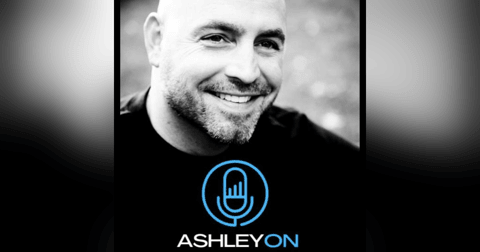


Ashley On - The Light Within Us All with Gregg Braden
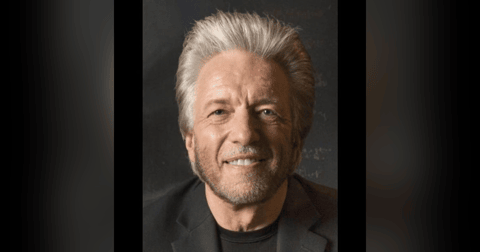


Today's guest is the visionary Gregg Braden - renowned author, scientist, and truth seeker - whose work uncovers the hidden links between biology, spirituality and our cosmic potential. In this profound dialogue, Gregg and Ashley explore:
🔹 The “spark” within every human being — and what it truly means
🔹 How our DNA functions like a fractal antenna for coherence and quantum communication
🔹 Why ancient traditions preserved knowledge of our divine potential
🔹 The implications of transhumanism and the future of human consciousness
🔹 And much more…
The future of humanity is not about outsourcing our consciousness — it’s about awakening it.
Ashley Grace: Welcome to Ashley on your one stop podcast where we talk about health and wellness, spirituality and all things new. Stick around as we delve deep into innovations to support a better world. â Hello and welcome to the show. Really excited about today's show, we've got Greg Braden joining me today. â for those of you who know Greg, he's a renowned author, scientist, and truth seeker â whose work uncovers the hidden links between biology, spirituality, and our cosmic potential. In this episode, Greg and I explore the convergence of ancient insight, modern science, and conscious evolution. Greg discusses what he means when he says that humans have the spark of the divinity inside of us. and how this light works alongside the 3D fractal antenna that is our DNA to receive and deliver quantum communications and coherence. We discuss how the reality of this spark has been suppressed throughout history and how this has been recorded by traditions such as those of the Gnostics, Mesopotamia, Sumerian, and early Christianity. Finally, Greg also explores what he calls the transhumanist movement. whereby many humans are actively working to create a future where we outsource our consciousness and biology to machines. It's a great show. Thanks for joining. Do you ever forget where you put your car keys or why you just opened the refrigerator door? Maybe you just met someone and can't remember their name two minutes afterwards. Or do you suffer from brain fog, possibly from menopause, or from the virus? If any of this is resonating with you, then you really need to check out ignaton.com. Ignaton is the world's only quantum charge supplement using energy from the sun to make memory and longevity supplements work better. And this is proven. This is cutting edge physics and university studies published in peer review journals show that igniton charged ingredients work better than the same non-charged ingredients and placebo. We're talking about amazing results. For the brain, there's an 83 % increase in mental quality of performance, a 51 % increase in attention, and a 28 % increase in short-term memory. For stress and inflammation biomarkers, we're talking about a 37 % decrease in IL-6, a 28 % decrease in CRP, a 13 % decrease in GGT, and a 9 % decrease in blood pressure. While advanced physics isn't cheap, Igniton provides a 30-day full money-back guarantee, so it's risk-free. Go to igniton.com and use code Ashley to save 15%. That's I-G-N-I-T-O-N dot com. and use code Ashley to save 15%. Thank you. Greg Braden, great to see you again. Thank you so much for joining us. Welcome to the show. Ashley, I am so excited to be with you. It's good to see you today. I've been traveling and I'm coming to you from our studio just outside of Santa Fe where the heat has been shut off. And I'm a little bundled up today, but it's good. It's good. It'll make for a lively conversation, I'm sure. Well, I guess we're finally getting a little bit of winter. So it's cold up here in Boulder today, too. So I guess we're due because it's been 60 all winter long. We've had an unseasonably mild winter so far. We're happy to see wet in whatever form it takes. So I'm happy on that. Indeed. I don't know if know if you've watched any of my programs, but I like to just kind of dive right in. So I thought a good place to start today would be, you know, Big fan of yours and have watched you and read your books and you speak often about this idea that there's a light within us all, kind of an inner spark. â It's been acknowledged across spiritual traditions and though it's been suppressed throughout history, which is very interesting to me. I wonder if we could just get started by you walking us through what do you mean by this light and how does it connect to ancient teachings like the Gnostics and the Gospel of Thomas that you and I talked about before? Well, it's a big topic. Well, you know, the idea of the light â within us. That is the term that is used by ancient indigenous traditions. It refers to a much deeper concept, Ashley, and this is something that's science, modern science is really struggling with. There's a part of us that does not live within our bodies. There's a part of us that is not inside of the cells. It's not inside of the neurons, it's not inside of the DNA. The studies that scientists, the experiments that they're now conducting are leading them deeper into this conclusion and it's perplexing. It's a conundrum for many scientists because their training says that we're all there is. This is the whole foundation for the movement to replace the human body with technology. The thinking has always been that we are all that there is. So if you replace the parts that can wear out with synthetics that don't wear out, you're home free. And the piece that is missing is precisely what we're talking about right now. So let me just start with an experiment. This was done at the Cognitive Sciences Research Facility in Australia. It was done in 2022, so this is a pretty recent experiment where Scientists took human neurons that were not attached to a person. So these are neurons in a Petri dish to keep them alive. And they configured a very special computer chip that would allow an interface that allowed the neurons to connect to the chip. So now what you've got is a biology technology interface. They took this chip. They plugged it into a computer that was already loaded with a video game that is â in human memory it is prevalent in human memory because it was the first broad-scale video game released in November of 1979 and it is the game that's called pong P O N G I was gonna say it's pong and you know, I can't even say it without without a big smile because by today's standards, that game is so primitive. But at the time, and I remember when this game came out, it was, I mean, it was the bomb, you know? It big deal. We had never seen any kind of a game on, at that time they were called CRT, â Cathode Ray Tube Computer Screens. And for any of our viewers that may not be familiar, was simply a game, it looked like a game of â badminton or tennis on the computer screen where you controlled the puck on the sides and the cursor was moving from one side to another and people would spend hours around this. So the point is, it was in our consciousness, all right? So they loaded the chip with the neurons into a computer that. Already had pong on it and to the amazement of the scientists the neurons knew how to play the game and they began playing pong and To the further amazement the longer they played the game the better they got they were learning as they went along All right now aside from the humor about what's happening here â When we really think about what's going on here Here is the problem the scientists have. How do neurons isolated from a person in a Petri dish know how to play the game of The deeper question, where are the instructions for Pong? Our conventional scientific model says that those instructions must be inside the neurons. Because our conventional wisdom says we're it. We are all that there is. â What the scientists found when they looked is there was no place for those instructions But then you can't make this up there was another study that came out in a peer-reviewed journal just about the same time and It was a study of DNA from an IT perspective information technology And what the study found this is published in the Journal of Soft Computing proceedings from the Journal of Soft Computing What they announced in this peer review journal is that DNA is a three dimensional fractal antenna. Now we all know an antenna tunes to a signal, a fractal antenna tunes to a broad array of signals across a vast spectrum of information. And what they're saying to us, this isn't a metaphor, this is a literal statement. that we are tuned to information through the antenna of our DNA. And that information is pervasive in the world around us. So what's inside of the neurons is DNA. A neuron is a cell. There's DNA in the nucleus of that cell. The thinking now, scientists are still struggling with this, but the thinking is that the neurons are the antenna that tune to the place in the field. Where information is pervasive and where the memory of Pong in the field is pervasive. â Another example of this, maybe if you've ever tried to learn, I'm musician, a guitar player since I was eight years old. When I'm trying to learn a new piece of guitar music or trying to learn a foreign language. In the language, we speak phonetically. initially trying to mimic the sounds of a foreign language or awkwardly go through some fingering patterns on a fretboard initially. And then all of a sudden, here's what happens. All of a sudden, one day we wake up and we're thinking in French or we're thinking in Spanish or I'm playing like Steve Vai who is my guitar hero, one of my guitar heroes. And so we say, what happened? â There's a- a â beautiful time lapse photograph or video that actually shows what happens. When you have a couple of neurons looking for communication, they will send out their dendrites is what they're called, look like little tentacles. And it doesn't happen immediately, it takes about 72 hours, it takes about three days. for those neurons to find one another. That's two. When you look at a slide of neurons, what you will see is that the entire slide of neurons are all looking to connect with one another. And it takes about 72 hours or three days. So what that means is when we attempt to become a better version of ourselves. So we attempt to learn something new, to think differently, learn the language, learn music, solve an engineering problem. The act of us attempting to do that is the trigger. It's the biological impetus for the neurons to find similar neurons to create the neural network that becomes the antenna. Tuning to the place in the field where our desired outcome exists Where the poem where the music we're all you know, my wife is a â Voting member of the Grammys and a few years ago. She invited me to go to the Grammys with her and I said sure Yeah, Yeah, and I took the opportunity to do a little experiment every artist that I talked to musicians Singers, songwriters, whatever it was. At some point in the conversation, I would ask them, Ashley, this question. I'd say, where did the words for that song come from? Where did that amazing piece of music come from? And every single one, to a T, every single one gave me exactly the same answer. And I know our viewers already know what this answer is. They all said that music, those words didn't come. from me, they came through me. They all said they were a vessel, a conduit of some kind. And all of this to say that there is a part of us that exists in the field. And that the experiment now, the scientists are struggling with this. You've got neurons playing pong, that violates. the accepted mechanism for the way we believe memory works. And the only way that we're ever going to move forward, whether it's AI, which is trying to replicate human cognition, or even the cloning of life, the only way that we're going to move forward in a positive and a healthy way is to acknowledge the part of us that does not exist, does not... reside inside the physical body, which can be measured, and the role of biological resonant antenna. Cell membranes are resonant antenna. DNA are resonant antenna. Neurons are resonant antenna. And that opens the door to a whole different conversation about who we are and our relationship to the world around us. When it comes to Now back to your original question, our most ancient and cherished spiritual traditions, and I'm going to make a distinction between spirituality and religion. In its truest sense, spirituality, it pre-exists religion. â It is about relationships. It's about us and our relationship to one another, our relationship to the cosmos, our relationship to A higher power to God, whatever we think that is. Our relationship to the past, to the future, to the earth, and to ourselves. So once we understand those relationships, we become very powerful beings. It's a high level of mastery. Religions came along later and wrapped the rules and the dogma around the spiritual principles to control that kind of power. So I just want to make that distinction. So when we talk about the spiritual traditions, almost universally they have said that there's a part of us that doesn't live in our bodies. 1945, there was discovery made in a â long denial, it's actually near the Valley of the Kings, near Luxor in Egypt. And that was the discovery of a sealed vase, a jar. â That was about two feet, about 24 inches high. And inside that jar was found a collection of manuscripts that had been banned in the fourth century. And those banned texts are now known as Gnostic texts. â And the monks that buried them were believed to be Gnostic monks. The word Gnostic simply means gnosis, it means knowing. Greek for knowing. And so the Gnostics believed that it was through the knowledge of the deep truth of who we are and where we come from, including the spark that lives within us, that we transcend the suffering of this physical world. And a big part of that was the acceptance of the part of us that does not reside within the physical body. The language that they used, they called it light. The light of the eons, A-E-O-N-S. â Eons are advanced spiritual beings that radiate, they emanate from an original source, and they're responsible. to some degree for the world we live in. So in the Gnostic text, they talk about the light within us lives the light of the spark of these high powerful beings. To the early Christian church, it was a different world. And Rome was consolidating power and was creating a single religion and attempting to have that religion reflected. in a text that we call today the Christian Bible. So they held a series of councils to determine which texts and which interpretations supported that consolidation, and any texts that didn't were banned. And it's for that reason that group of monks buried this collection of 52 plus texts. And we don't know if they plan to come back at a later time or maybe they buried them for a future generation that, you know, they could only imagine in their mind. I don't know the answer to that. But it's those texts that did not conform to the idea that we need an intermediary outside of us. We need someone to intervene on our behalf for our salvation. That was the message of the early church. The Gnostic text said that our salvation comes from us remembering the truth of who we are. And a big part of that truth is the fact that within us we have something very ancient, very powerful, very sacred, very precious, a spark that links us to another realm so that we can express our divinity, our love. our imagination, our innovation, our empathy, sympathy, compassion, forgiveness, these are all expressions of divinity. And it's that spark that allows us to express those experiences through the gift of this physical body that they call the vessel. It's long answer to a short question, but the experiment in the cognitive studies strongly supports Principles in those texts saying that there's a part of us that is not bound within the physical body yet expresses through the physical body Yeah, I This is just a There's no accidents, you know I don't in my purview and I always just literally had a text exchange this morning with a very dear friend who â Gets very uncomfortable by this conversation because he leans more toward the religious side of things as opposed to the spiritual side of things. again, for our listeners, I'm not saying one is better than the other. That's not the intention. It's just that this is the reality. And these monks buried these texts intentionally for a reason. They knew something was amiss, right? â Well, they were Right, they were banned. They were banned. At that time, the text is during the fourth century. These councils, the Council of Nicaea is one that was commonly known, 325 AD. The texts were officially banned. Anything that didn't support that were banned in 367 AD. And it was into the 390s, there was another council called the Council of Carthage that kind of sealed the deal and said that any, the fundamental difference is that the Gnostics believed. and continue to believe today that we are a species who has forgotten who we are through the act of descending into this dense form of matter. A consequence of that is a loss of memory. As opposed to the church that says we are a species of sin who has fallen from grace, from a higher... a higher form of existence. And the church says to redeem us we need things like sacrifice and we need intermediaries. The Gnostics say that our job is to remember who we are and that it's through that memory that we awaken this connection and there are practices that they propose to help us in that remembering. But it's a very different idea. They acknowledge Jesus. At that time, his name was Yeshua. It was later translated from Aramaic into Greek and Greek into â Latin and became Jesus. They acknowledge him, but they acknowledge him as a very learned man who came to awaken humankind with his knowledge. â And so that's where... He didn't come here to start a religion and have people worship Him, right? mean that's... No, He didn't and He never claimed that He was God. The church made that claim. Yeshua never claimed. He said, Father and I are one, but they come from the same source. But He said many times that He was not â God walking the earth. And the church, of course, makes that claim. Well, that sets everything up to be my God's better than your God and you know the... divisive nature of religions that we were dealing with still today, right? it's from the major religions of the world, these three major religions, all stem from the â the Abrahamic traditions. And so they have that in common. So they acknowledge him as a learned man and as a teacher. And not that the cross was a sign of suffering, but the cross was a tool of liberation because it freed that part of him from the physical body to experience, you know, once again. Jesus gave us a clue that they left in, you know, in Luke 17, 20, 21, the kingdom of God is within you. Well, this is so I've been dancing around this a little bit. The second most dangerous text in the Gnostic text. The jar had 13 manuscripts, 52, representing 52 documents. It was found near a village that today is called Nag Hammadi. That village didn't exist at that time. And so this collection is called the Nag Hammadi Library of Gnostic Texts. The second most dangerous text is called the Gospel of Thomas. And I know many people have heard of this. It's a very different gospel rather than telling a story of sin and redemption like Matthew, Mark, Luke, and John. The Gospel of Thomas is a record of 114 statements that Jesus made during his lifetime as recorded by the scribe Thomas. His name was Judas Thomas Didymus was the name of the scribe. And among these, reflects what you just said. Jesus, he literally said, there are people, I'll paraphrase, he said, many people think I came to bring peace to this world. He says, I didn't come to bring peace. He said, I came to set a fire and I'm going to watch it burn and that fire is the fire of truth. And he said, he made very powerful statements. He said, that which you have within you, if you bring forth that which is within you, what you bring forth will save you. suggesting that there's a force within us. But then he said, if you do not bring forth that which is within you, what you do not bring forth will destroy you. Because a power so great cannot be contained, it must be expressed in some way. And we know that when we repress our love, â it leads to disease and illness. And a lot of studies relate human emotion. to the dysfunction of the DNA in the cells. These are peer-reviewed studies that show that. So he made those kinds of statements. The difference, and then I know we're gonna move on from this, the difference be the modern Christian Bible, and there are many versions. I actually collect Bibles. â My wife has allowed me to have some museum cases in the living room that looks kinda like a museum now. Where where I've worked with dealers in different parts of the world to acquire some â some of the the oldest Bibles that are in existence today and The Geneva Bible was printed in 1500s â King James first version was in London 1611 â came over on the ships that came to this â to this part of the world and Those texts, it's interesting because the older Bibles include many of these Gnostic texts where the versions today do not contain those. But it was considered heresy. And the heresy was what you just said. Jesus in many ways said, the kingdom is within you, the light is within you. The first most dangerous book, I just have to say, if you say the second, people are gonna wonder what is the first. It's the secret book of John also known as the Apocryphon of John and It is considered the first most dangerous book because he begins â The book was said to have been dictated to John by Yeshua Except it was after he died after the crucifixion So wasn't during his lifetime, it was after the crucifixion. And he begins with an architecture of the universe and where we fit into that architecture. And that architecture is a very different view of the universe from what Genesis leads us to believe. So these are the reasons these texts were banned and the people who were teaching this were, some of them were, they were definitely persecuted, some of them were executed. for teaching these teachings because they didn't support the narrative and the continuity that was being created with the new Christian Bible. Yeah, I say this with the utmost respect, but what a rebel Jesus was in a very cool story. mean, the whole thing. And the reason it's interesting to me in this conversation, obviously, you know, I'm a part of the company Ignaton. And we're dealing with quantum energy and using quantum processes to supercharge supplement ingredients so that they work better. But when you start looking into quantum, I think it was Louis Pasteur, I think it's often misattributed to Albert Einstein, but I think it was Louis Pasteur who said, the more that I learn about science, the more I believe in God. â The two go so hand in hand when you start into this conversation about quantum energy and the light. you know, spirit of the light within us. â Do you kind of rewinding a little bit, maybe a little bit of a tangent off of this topic? â You know, and you probably know more about this than I do, but the spark of the divine, right? I mean, some of the things that I've read about the Sumerian texts â speak to this and that. there was this kind of argument, if I have it right, please correct me, but between these â gods with a little G, as I'll say, Enki and Enlil, and that Enki really wanted to create and have human beings have more of the spark of the divine, Enlil was completely against that. Enki secretly gave us the spark of the divine somehow in our DNA. Am I on the right track with this? Yes, there's a number of different ways. I mean, there are a number of different ways that we can approach this. You can look at the modern Christian Bible, which is a good book, even though it's incomplete in some respects. It's heavily edited, let's say. They took a lot of liberties in putting the book together. It was a different world. It was a different time. And they were trying to accomplish the consolidation of a power and a people and bring peace to the world. So that was the goal. But that book is a good historical book. I mean, you can go to the places that are identified and dig in the dirt and the places are there. So it's a good historical reference. It is steeped in religion. All right, so that's one way. You can go to the Mesopotamian texts. Mesopotamia is a region. So that includes ancient Acadia, ancient Sumeria, ancient Babylon, and they all use the same language cuneiform. And you can read the same accounts of human creation without the religion. Or you can go to the Gnostic texts, which are good historical texts. They don't have the religion, but they have the spirituality. Or you can go into a scientific laboratory and you can look reverse engineer. human DNA to the mutations that had to happen that make us who we are in the fact that those mutations cannot happen under natural conditions. cannot and they will not happen under natural conditions. So you mentioned the Sumerian texts, the Babylonian texts. â The creation story is called the Enimu Elish, and it is a seven tablets fascinating story that tells of the creating of the first human and goes into tremendous detail, but the bottom line is the the leader says let us sacrifice one of our own so that his blood and his bone may become the human. So it suggests that an individual gave his life so that we could, that part of him could be made into the first human. Now if you're familiar with the movie Prometheus, Roland Emmerich, this is the theme of the movie Prometheus and if you, if the first five minutes of the film you see a human-like being standing near a waterfall on earth. His ship is leaving him. It's fading away in the distance. And he's drinking a potion that will kill him. And he falls into the oceans of the earth so that his DNA can mingle and become the DNA that seeds life on this planet. And the rest of the movie is about humans wanting to go back. traveling in space to the original root race to find out why they made us. mean, it's a fascinating movie. But the idea was that it took â another being had to give his life so that we could have his DNA within us. And the story that you're telling of Enki and Enlil in the Sumerian texts â has a similar outcome, a different way of getting there. The outcome for both. is that we are infused with a biology that is part from the earth and part from an advanced race of beings, if you want to think of it that way. An advanced form of life. And when you read the Babylonian text, this is very, very clear, and when you read the original biblical text before they were edited, Almost the moment that we were given the powers that we were given Our creators realized that they had given us something even greater than what they have right and they began to Look for ways to repress the power that was given to us The power is a hybrid power. We are a hybrid form of life The biological material from this world and the DNA, and this is why we started with the experiment that I shared. The DNA that we were given, the DNA is a fractal antenna. It tunes us in to something that's not in our bodies. The DNA we were given from a higher form of life tunes us into a realm. If you want to think of it as a dimension, as a knowing, as a way of being, that... makes us exceedingly powerful in this world. And the greatest fear, the greatest fear of the dark forces in this world today is not that we know who they are because we know who they are, and it's not that we know their plans because they've told us their plans. Their greatest fear is that we remember who we are because in the presence of a fully enabled, fully capacitated human, the power of that darkness dissolves and it fails. That is a deep truth that stretches back to the very beginning, 200,000 years ago. 10,000 generations is when we first appeared. And our history, in addition to all the interesting things, pyramids and Machu Picchu and Rome and all those cool things, the very high level as a systems thinker. I can see this very clearly. Our history is the story of us attempting to remember and preserve and awaken our divinity, the spark of the force that completes us in this world. And because of where we are now in the cycles of time, â cosmology, geology, climatology, social cycles of humankind were all converging around this 2030 date for a whole number of reasons. What you're seeing is the powers that be are jockeying to be in the best position of power as these cycles converge. And like you said, that's no accident. You're seeing dark forces exerting more power and you're also seeing light waking up. I mean, you and I are having this conversation. If we had this conversation 10 years ago, people would think it was pretty hokey and some may still some may still But there's a point. There's a point. I think we have to stop beating around the bush There is a â spiritual struggle that is ancient that continues and we are part of that and the way technology is Being rolled out in our world is challenging our very humanness with AI computer chips Wanting to replace the human capacities that give us our divinity and and the question That's up for everyone in our community right now is about love. It's a very easy question Do we love ourselves enough to accept the gift? That we were given two hundred thousand years ago. Do we love ourselves enough to accept the gift of our humanness and The divinity that can only be expressed through a human body And if we relinquish this body to synthetics, we lose access to our divinity just the way if those neurons in the Petri dish were not allowed to communicate with the field, they would lose access to those instructions and how to play the game. It's the same thing. Yeah, I want to... Or those resonant antennas. So that's kind of a big picture for where we are right now. I want to come back to that. very soon before we because I there's a whole I mean you and I've talked off camera about this and I want to get to that before we before we go to the air I want to take us back just a little bit of a step because I've heard you talk in other forums about the and I think this relates back to this DNA being a 3d fractal antenna to the quantum realm I'll call it with a spiritual realm right and you've you've talked about chromosome 2 and and chromosome seven. And to me, I've just, my whole life, ever since I first saw this, you know, 15, 20 years ago, â I've just been blown away. â You saw me doing that 15 or 20 years ago? I don't know if it was you, but I saw that I saw something about the chromosome. You know what I mean? And then I've read your stuff, I've watched you and you've talked about it too. it's, it's just so obvious when you look at it that a splice has occurred, right? It just, it just. Nature doesn't evolve that way. again, you know more about this than I do, but is it chromosome two or is it seven or is it both of them? So there are actually a number of mutations that we couldn't even recognize these until the 90s. So this is all relatively recent. And what we began to see when we look at the human genome is there are a number of mutations that had to occur to make us who we are. And I give two examples. And for me, what I call the smoking gun, I think the most obvious is chromosome two. Chromosome two is the second largest chromosome in the human body. It takes up about 8 % of every cell that we have, of the genome of every cell. And there are about 1,200 genes on that chromosome. I'm just going to talk about one. Only one is called TBR number one. TBR one is responsible for our neocortex. It's responsible for our human attributes of empathy and sympathy and compassion. It's responsible within that neocortex. We have neurons that we're only beginning to understand, we only found in 2004 called kubelli neurons. we know these commonly as mirror neurons. And this is what empowers our imagination. When we imagine, those mirror neurons don't know the difference between having the experience and seeing it in the mind's eye. On the neuron level, they don't know the difference. That's powerful for us. Because the neurons will begin to signal the body to create the chemistry to support what it is that we're seeing in our mind's eye. We were taught to focus on our disease, on our illness, on our insufficiencies. What happens if we see ourselves as fully healed, fully enabled, fully capacitated, â abundant, healthy, joyous? Well, the neurons begin to kick in the chemistry to support those, and it's not limited to the body because that informs the field of Exactly the same thing and this opens the door to a lot of other potentials that we may or may not talk about here So so where did chromosome 2 come from? There was a conference called the proceedings from the National Academy of Sciences the volume is called genetics and the whole thing was dedicated to human chromosome 2 and the scientists acknowledge that Chromosome 2 is the result of what they call an ancient fusion A telomere to telomere fusion of pre-existing chromosomes. So telomeres are typically at the ends of healthy chromosomes. Chromosome two, they're in the middle where they shouldn't be. The only reason they're there is because they were fused in that way, but it didn't stop there. Because after the fusion, there were genes that were added, genes that were taken away, genes that were silenced to stabilize that fusion. And that's not the only place where a mutation happened. Another mutation, and you mentioned chromosome 7, I mentioned I'm a musician before I was ever an author, and I still am, guitar player, and singer-songwriter. And one of the questions I've had for years, we share over 98 % of our DNA with the chimpanzee. I mean, over 98%. Yet you will never see a chimpanzee sing. And that was my question. How come we don't see a chimpanzee sing Led Zeppelin's Stairway to Heaven? You know, you're never going to see it. And the reason is for about 175 million years, in all primates, so gorillas, orangutan, chimps, human, or chromosome number seven, it was stable, okay? Very stable. All of a sudden, There was a little, this little switch between a couple of genes that connected our brain and our tongue and our jaw in a way only for humans that allows us complex speech like we're having right now and the ability to sing. It happened in no other form of life. And here's the kicker, it didn't happen slowly, gradually over a long period of time. It happened quickly. about 200,000 years ago, about the same time that chromosome two was being fused. Chromosome two was not the product of a long, slow, gradual process. This violates Darwin's ideas of evolution. Now I want to be really very clear, I want to clarify this. My first degree is as a geologist, I am a geologist. I believe in evolution. Actually, I went to school very close to where you are, in Fort Collins. Colorado State University. â Evolution is a fact. And I've seen it in the fossil record when I did my field work for plants, animals, insects. The point is that the theory breaks down when it comes to humans. And Darwin's theory is in trouble when it comes to humans. I think real scientists know that. If they're willing to accept the evidence that now exists, real scientists know that. Pop scientists are reluctant to accept this. Well, and I think from what I've read, Darwin even knew this. Darwin had his doubts, and I wrote a book in 2010 called Deep Truth. And I've got about four or five pages of refutations of Darwin's theory the moment he came out with a theory, 1859, his colleagues, his peers. saw a lot of problems with Darwin's theory. So it was a different time. And Darwin could not possibly have known in his day what we now know in ours. And I think by the end of his life he recognized that⦠And he was the first to say. Darwin⦠I wrote about this. The reason I'm sharing this, Darwin's great-great-granddaughter happened to be in an audience where I was speaking in London. And I didn't know that she was in the audience, and it's good that I didn't know, because I didn't hold anything back. And she came up afterwards and said, thank you for honoring, â Charles, the way that you did. And she said, you got it right. You're right on. â He said, and this is published often, he said, the minute the evidence surfaces that refutes my theory, my theory must fall. and a new theory must be put into place. And he was willing, he was just trying to move science away from religion. That's a real scientist right there, right? I mean, he's open to the possibilities of being wrong and being proven in a different way. So the bottom line, what we're saying here is that 200,000 years ago, which, you know, it sounds like a long time. Ten thousand generations is how long we've been here. It's not really that long And we are the product of what appears to be an intentional act rather than random mutations and lucky biology is as it's called sometimes Yeah, and it's that intentionality that links the science with some of our most cherished Spiritual traditions that say we were given the gift of our humanness. And the best minds of our time right now are telling us, that unless we change our trajectory, we are the last generation of pure humans that this world will ever know. By 2030 to 2032, when you speak to someone at the grocery store or in the airport, you'll be speaking to some hybrid of machine biology interface. And there are proposals. Right now, even it goes so far, there are proposals to implant every newborn beginning in the year 2030 with computer chips that will link them to the cloud and link them to one another so that they can compete successfully in the technological world that they're born into. That's the justification. I am pushing back, not on technology. I love tech and I have worked in the world of tech and I respect the technology outside of our bodies. What I'm pushing back on is the replacement of our humanness. And I think we're worth preserving and we're about to give our humanness away before we even know what it means fully to be human. And I think that is a vital message for all of us. Well, I think that's perfect transition into where we were going. just a few minutes ago, â what I wanted to talk to you about was you term this, I've only seen you talk about this, I don't know if other people are using these words, but the transhumanist movement, basically, when we spoke before outsourcing our consciousness â to machines, which just seems like going the exact opposite way this entire conversation we've been having for the last 45 minutes. â What do you mean by that and how does that relate to the spiritual test that we're all being put through? Well, it's actually a couple of questions that you just asked. And because of the conversation that we've had over this last 45 minutes, we've now built a vocabulary so that we can have this conversation. First of all, the transhuman movement, the word trans simply means beyond. So it's interesting, a lot of times I'll be in an audience and somebody will ask me a question about trance and I'll say, well, trance what? Because the word just means beyond. â So transhuman means beyond human. And it is a movement that has taken on various forms throughout the 20th and now the 21st century. And what makes it concerning now is for the first time we have the technology to actually accomplish. what the vision has held since the late 1800s and early 1900s. And that is the replacement of our humaneness with technology that can only approximate our humaneness. Now, there are people that have said, I've been in panels with scientists that say, well, Greg, isn't that the next step in our evolution to merge humans and machines? And I don't even have to think twice. I say, no, it's not. And here's the reason. When we talk about an evolutionary process, evolution implies that we gain capabilities that will support our survival in the world. And what we now know is that when we replace our natural systems with machines, we lose abilities. The natural systems begin to atrophy and we lose those systems. So it's actually a form of devolution rather than evolution. So let me just give you, mean, one of the examples. I'm just going to phrase it this way. When I was a kid, back in 1950s and 1960s, I was told, and many of you and our viewers were as well, that we are born with a fixed number of brain cells. And that lifestyle choices like too much beer in college is going to destroy those cells, or too many Grateful Dead concerts, okay? We're going to destroy those cells. Now we know that we are producing new brain cells every moment of every day until the last breath we take on this earth, regardless of our age. We can be 120, the oldest woman, 132 years old. She was still producing brain cells, but there's a catch, and this is important. If the new brain cells that we produce are not engaged in a meaningful way within about seven to 10 days, about a week, the body believes they're not needed. And so they will atrophy and die. Those new cells will die if they're not used. That principle applies to every system in the human body. It applies to our â immune system. If we're using chemicals to replace what our bodies would naturally do, then pretty soon the body says, I don't need to do that anymore because the chemicals are doing it. It applies to the reproductive system. It applies to cognition. So when we use AI, for example. to replace creative endeavors. use, and I'm not talking about an occasional use, you know, a one-off. I'm talking about the chronic use of AI to write songs, to write music, to create art, to create poetry, to do creative writing. The chronic use, what happens, there was a study, a peer-reviewed study at the University of Toronto in February of 25, one year ago from This recording right now is exactly a year ago. And what they found is that human imagination and human creativity is stifled and diminished with the chronic use of AI because the part of the brain, just like those cells that aren't used, the part of the brain that does creativity and innovation and imagination, if it's not used, the body says we must not need it. And so it allows those systems to atrophy and die so that the energy that supports them can go to other parts of the body that needs the energy. It's all about the efficiency. In biology, it's called use it or lose it. And I know we've all heard that. So these are the drawbacks of integrating the technology into the body. Now, if we look at the big picture. As we mentioned earlier, there is a fundamental struggle on this planet that lot of people don't want to talk about between good and evil. And the goal of the evil is to deny us our humanness. The goal of evil is to deny our divinity, our ability to touch the part of ourselves that doesn't live in the body. When we replace our natural body With synthetics, we lose access to that part of ourselves. And in that way, evil has accomplished its goal. So from a very deep, I mean this is a big conversation and some people aren't comfortable having it, but I think it's important to have it. If you're looking at the big, big picture, â it's our job to put guardrails on that tech and allow the technology to serve us. yet not enslave us. And we have to make those choices because the people creating the technology have dumped it into the laps of a broad general audience with no guardrails, no instructions, no manuals on how to use it. And we're already seeing the fallout, the negative fallout and the negative consequences in young people. Sadly, there have been young people that have taken their lives. Yeah, because because the AI based on the way that person has described their lives and the failures and the calamities of their lives the AI literally said hey the best solution is just to end it and and they they have done that so we've The tech isn't going away our job, and it's not about Making anyone wrong. It's that's not what this is about I think we're being pushed in a really brief window of time to come to terms with the deep truth of who we are, what it means to be human, and to recognize the gift of our humanness at the very moment we're on the precipice of giving our humanness away forever to the technology. And that's my message. That's why I've written the new book, Pure Human. And there are tools that can help us to come to terms. with our humanists. â the information at Gaia and the research that Gaia is doing right now, I think for some people can offer very powerful tools to lead us into new ways of thinking of ourselves and new ways of living our lives. So I think this is an important message right now. To the degree that we can become the best version of ourselves, we have claimed our humanists. So the invitation is to imagine without fear, to love without fear, to create, to innovate, share our ideas, to have empathy, sympathy, compassion for our brothers and sisters that are suffering, to awaken the deep truth of our intuition and all of the potentials that come, the interconnectivity that comes with deep intuition. And when we do that, we're less vulnerable to the fear. that leads us to accept the technology in our bodies. Because what we find, Ashley, is that we are the technology. We are the technology we've been waiting for. And I think that's a message worth sharing. I think it's fantastic. one last topic I want to touch on before I let you go. â I spoke with a good friend of yours, Dr. Teresa Bullard, a few weeks ago. And she was on the podcast. And she said to tell you hello, by the way. â Please give Teresa my best and we go way back. We we met on a science panel at a conference That's great. What a small world it is so I shared something with her and I want to get your feedback on it because you know in my role here Digniton, you know, we're focused obviously on memory and cognition and we're focused on stress and inflammation markers, those are the biological outcomes, but there's a bigger piece of what we're doing, which is raising consciousness itself. And I wanted to talk to you about that from a context of this pure human idea that you're now pursuing with your new book and in this conversation about AI. â There's a famous experiment with Rene Payock. And it talks about the power of intention and consciousness. he had a robot that was programmed to walk with inside a perimeter in a random based on a random number generator. you know the the exercise showed that it was completely walking in random within this perimeter. He then introduced baby chicks into the robots awareness if you will for lack of a better term and baby chicks are known to imprint on the first thing they see is being their mother. So he put these baby chicks in the perimeter with the with the robot then he took them out and put them in a cage right beside that robotic you know, the robot in the perimeter and the machine changed its behavior and walked, for lack of a better term, only on the side near the chicks. So the consciousness of the chicks, i.e. the love, the higher frequency, â overcoming, you know, these lower frequencies of fear and anxiety, this love frequency was so powerful that it changed the behavior of a machine. â And I take that away as having great hope for the power of love. You we talked about Jesus and the message of Jesus earlier. And to me, this just relates into this whole conversation of AI. Is there an opportunity for us to learn from that and the higher frequencies of love? Could they be the answer as we go into this, you know, uncharted territories of giving away our humanness? Well, you just asked two questions. And so the answer is yes and yes. So, so to elaborate on those yeses the What we now know is that conscious what we call consciousness is information and energy Energy is information so in 2012 the CERN superconducting super collider Announced actually was July 4th the 4th of July on 2012 is when the announcement was made that There is a field of energy that underlies all of existence. It is the container for this universe, is the way it's described. That energy, now, I was at a conference not long ago, and there are scientists that talk about this, and here's what they do, Ashley. I'm gonna give myself room in the camera here. They'll stand on the podium, they'll say, â yeah, there's a field of energy out there. and their hands are doing this. They're still trying to separate themselves from that field. Okay, we are the field. So the average human, whatever average means, has about 50 trillion cells in the body. The word trillion, we used to not even think about it much until we started looking at national debt. Now we think about trillions a lot. But we have about 50 trillion cells in our body. Every one of those cells is made of about 100 trillion atoms. But those atoms are not stagnant. They're not static. They are constantly emerging from the field and collapsing back into the field in this beautiful dance of emergence and renewal. And this is what makes miracles possible. Because those atoms will emerge and fill the blueprint of the consciousness that we hold in place when we think about ourselves. When we can think of ourselves and feel ourselves as whole and complete, fully enabled, fully capacitated, vital, healthy, those kinds of emotions and feelings through the mechanism we've described, through mirror neurons, through the DNA. They create the boundaries of a blueprint that those atoms must fill in to. And when we talk about the hope and the possibility of this world, we want to change the world, what we begin to understand is that we are the field. And the field can only reflect back to us what we give it to work with. The field can only give us what we are projecting onto that field. So the message of Yeshua in the Gnostic texts was you must become what you choose to experience in your life and in the world. I'm paraphrasing. You must become those things. And now it makes perfect sense why, because how can the field give us something that we haven't given it to reflect back to us? And this puts the burden of responsibility, a joyous responsibility, and to me it's good news. Because when we wake up to the fact that we are the field and the field is giving us what it is that we've given it to work with, then what we don't like, we can make the adjustments, make the shifts without judgment. This isn't about making anyone wrong. It's about an awareness of a mechanism, and in the Gnostic terms, it is about remembering. the deep truth of the spark within us as that spark, as that light shines in the world through our divinity, through our imagination, creativity, innovation, love, forgiveness, compassion, empathy, sympathy, intuition. Those expressions are how we create within us the things that we want to experience in the world. So yes, we can go and impose our idea of change on the world around us temporarily. Ultimately, we must become the very things that we choose to experience. This is where the tools come in because the becoming is directly linked to the quality of our vessel, the quality of the temple that we are. So anything that can support the gift of the body that can give us, you our food is depleted from nutrients. You can grow your own food in your backyard and it's better than the market, but it's still depleted from what our ancestors had even 100 years ago. Because the minerals are gone in the soil and the biome has changed. So I think for this reason supplements are important and it's not one size fits all. we have to determine for ourselves what it is that needs some help and some support and what works for one person may be a little different for another person. That's a level of personal responsibility to find that. But to the degree that we can love and support the gift of the vessel or what... 1 Corinthians, if you're biblically inclined, 1 Corinthians 3.16 says, of God and the Spirit of God dwelleth within you." What they're saying is that we are the vessel that allows this spark to emanate in this world. Without this vessel, the spark can't be in this world. So our bodiesâ¦and that opens the door to a deeper appreciation for the gift of our humanists and maybe a deeper consideration for what we put into our bodies. what we do to our bodies and what we place upon our bodies within the context of this conversation. Again, with no judgment, just an awareness. If we want to be an optimum vessel, then we're going to do the things that will optimize that vessel. Well, I think this is a great place to wrap. I know you've got to go, and that's a good place to end. think â what I'm taking away is we don't need to become more than human. We just need to become fully human. And I think that's you know a wonderful message for for our audience here that's listening to this and Hopefully you agree with that and I just want to say thank you Greg It's it's always great to talk to you, and I really appreciate you taking the time to join us here today Actually, I'm in total agreement with what you said and I want to thank you and all of our friends our family at it Gaia For all the ways that you're helping us to become the best version of ourselves through information different perspectives because everyone learns differently, new discoveries on the leading edge, frontier science, all under one beautiful umbrella called Gaia right there in Boulder, Colorado. So thank you for the work that you do and for making this possible. thank you for your trust, because the truth is you didn't know what I was going to say on this podcast, and you trusted me to come on anyway. And that means a lot to me. So I love you, brother. I love my family there, and I love everyone watching. Thank you all. Love you too, Greg. And thank you for working in Led Zeppelin and Grateful Dead into this conversation. It was perfect. That's the important stuff, That's right. I'm going to hit stop here. Hold on for one more second, and I'll let you go. Thank you, Greg. Do you ever forget where you put your car keys or why you just opened the refrigerator door? Maybe you just met someone and can't remember their name two minutes afterwards. Or do you suffer from brain fog? possibly from menopause or from the virus. If any of this is resonating with you, then you really need to check out igniton.com. Igniton is the world's only quantum-charged supplement using energy from the sun to make memory and longevity supplements work better. And this is proven. This is cutting-edge physics, and university studies published in peer-reviewed journals show that igniton-charged ingredients work better than the same non-charged ingredients and placebo. We're talking about amazing results. For the brain, there's an 83 % increase in mental quality of performance, a 51 % increase in attention, and a 28 % increase in short-term memory. For stress and inflammation biomarkers, we're talking about a 37 % decrease in IL-6, a 28 % decrease in CRP, a 13 % decrease in GGT, and a 9 % decrease in blood pressure. While advanced physics isn't cheap, Igniton provides a 30-day full money-back guarantee, so it's risk-free. Go to igniton.com and use code ASHLEE to save 15%. That's I-G-N-I-T-O-N dot com and use code ASHLEE to save 15%. Thank you. Thanks for listening to Ashley on Nothing But The Truth For A Better You And Me.